Chimney Repair in Fort Worth, Texas
Expert brick chimney repair, crown rebuilds, and full restoration for homes in Fort Worth and Tarrant County
At Fort Worth Brick Repair LLC, we specialize in professional chimney repair and restoration services throughout Fort Worth, TX, and the surrounding DFW area. Brick chimneys are exposed to extreme weather, high heat, and moisture, leading to common problems that compromise safety and efficiency.
As experienced masonry contractors, we repair cracked flue liners, damaged crowns, leaning chimneys, spalling bricks, and deteriorated mortar joints. Proper chimney maintenance prevents water intrusion, carbon monoxide leaks, and costly structural failure.
Common Chimney Problems in Fort Worth Homes
Texas weather accelerates chimney damage. Frequent issues we fix:
- Cracked or missing chimney crown
- Spalling bricks from moisture and freeze-thaw
- Leaning or tilting chimney structure
- Deteriorated mortar joints allowing water entry
- Damaged flue liner or missing cap
- Efflorescence and interior water stains
Our chimney repair Fort Worth services restore safety, efficiency, and appearance while meeting local building codes.
Our Chimney Repair Process
- Inspection: Full evaluation including camera inspection of flue if needed.
- Cleaning & Prep: Remove loose material and clean surfaces.
- Crown Repair/Rebuild: Install or replace concrete crown with proper overhang and drip edge.
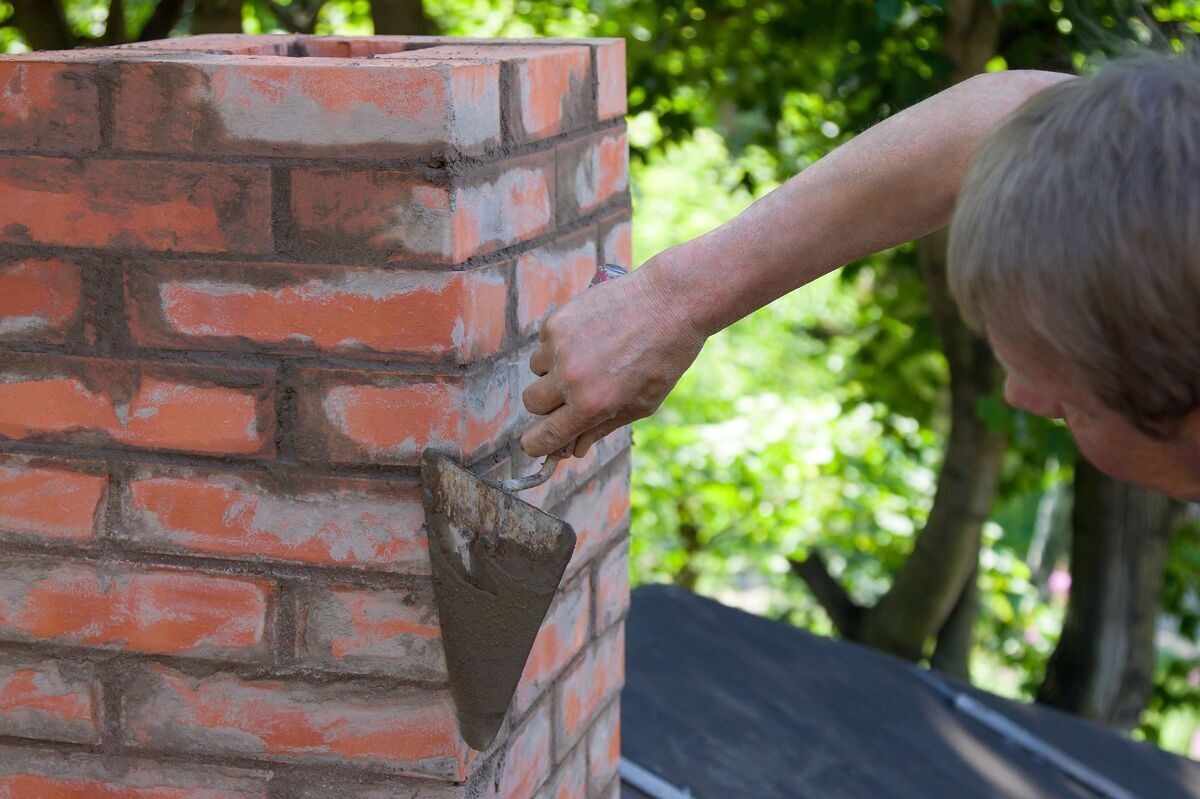
- Brick & Mortar Work: Replace damaged bricks and repoint joints.
- Flashing & Cap: Seal chimney base and install/replace cap and spark arrestor.
- Final Testing: Verify draft and structural stability.
Searching for "chimney repair near me Fort Worth"? Our licensed team delivers safe, code-compliant repairs with a workmanship guarantee.
Protect your home from chimney hazards — contact us for expert repair and restoration today.
Common Causes of Chimney Damage in Fort Worth & North Texas Climate
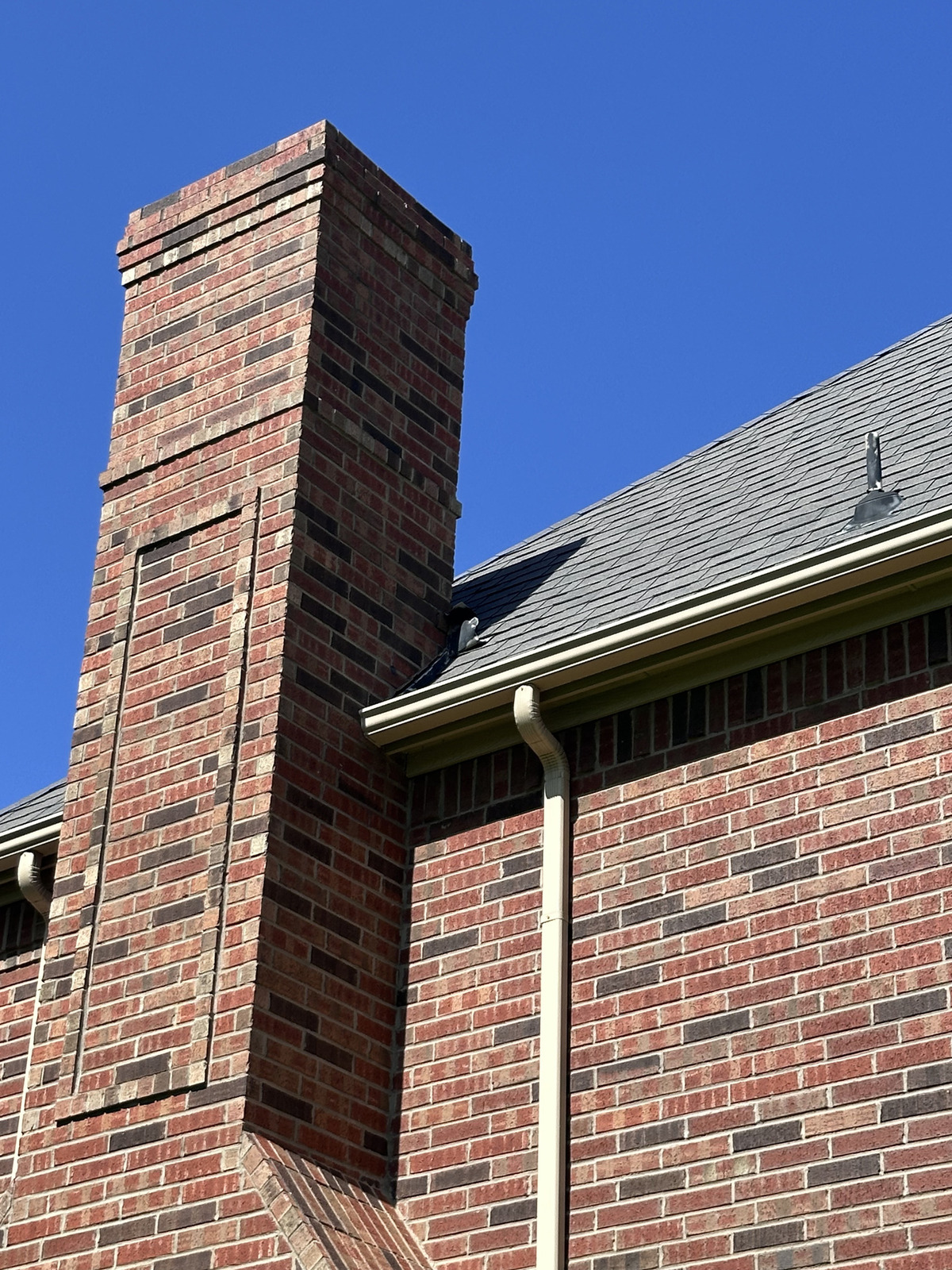
In Fort Worth, chimney crowns crack from water pooling on flat or poorly sloped surfaces and repeated freeze-thaw cycles that expand trapped moisture through hairline fractures. Crowns without a proper drip edge allow water to run down the chimney face, saturating mortar joints and accelerating erosion from the top down. Over several Texas winters, even a small crown crack becomes a major entry point for rain.
The region's expansive clay soil shifts foundations and separates chimney structures from the main roofline, opening gaps at the roof junction where flashing fails. Summer temperatures exceeding 100 degrees create thermal stress on flue liners and exterior masonry, while persistent humidity above 70 percent promotes efflorescence buildup throughout Tarrant County. Poor gutter drainage that directs water toward the chimney base compounds these issues by keeping the lower courses perpetually damp.
Key Warning Signs You Shouldn't Ignore
Crumbling or cracked chimney crown — The crown is the first defense against water entry; cracks allow rain directly into the flue chase and begin deteriorating the interior structure before visible exterior damage appears
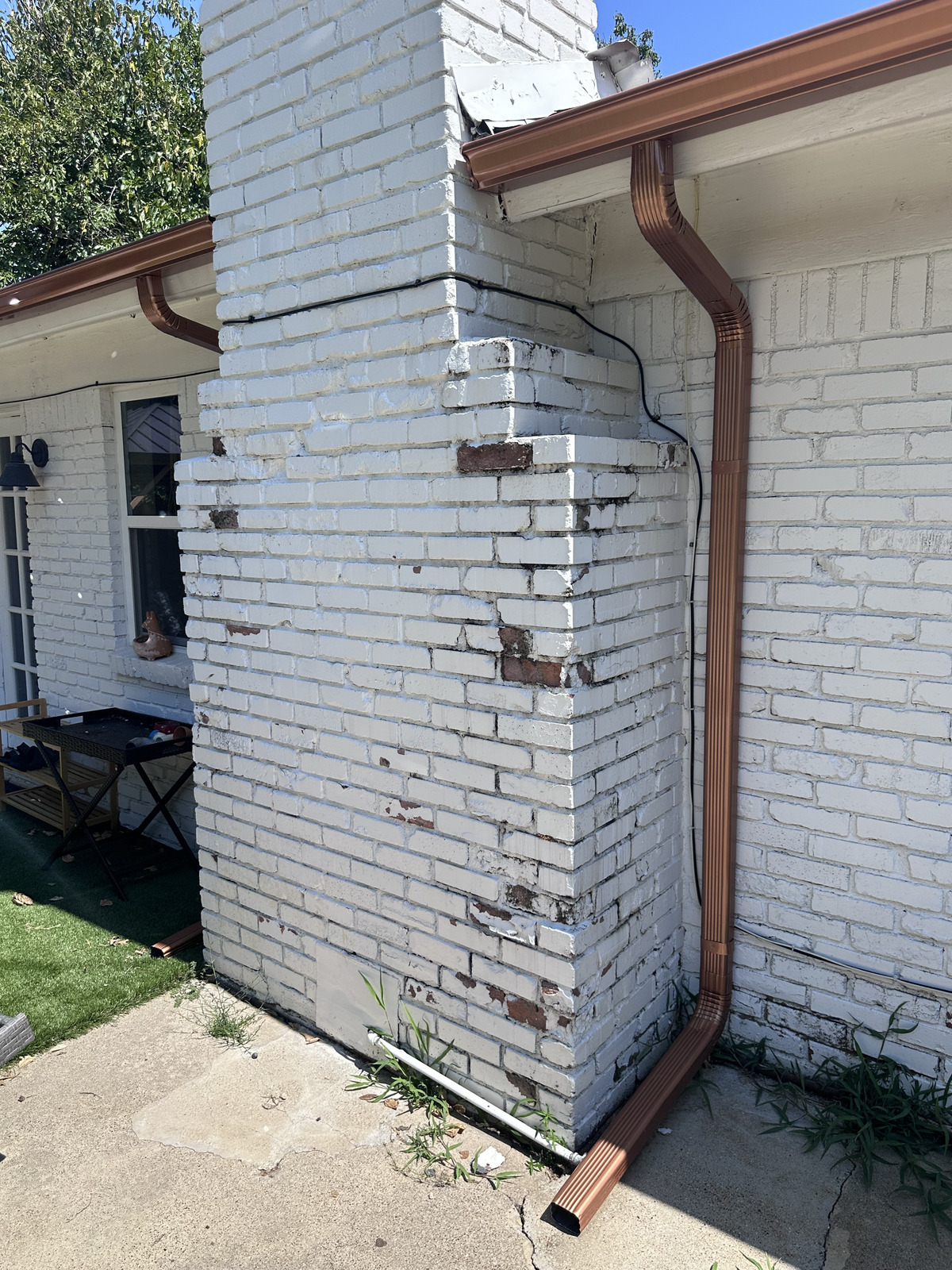
White efflorescence buildup on chimney bricks — Moisture is drawing dissolved salts to the surface through porous masonry, an early sign of water damage that indicates the chimney is absorbing and holding far too much moisture
Cracked or deteriorating flue liner — Creates carbon monoxide risk and potential fire hazard inside your home; damaged liners allow heat and combustion gases to reach combustible framing materials
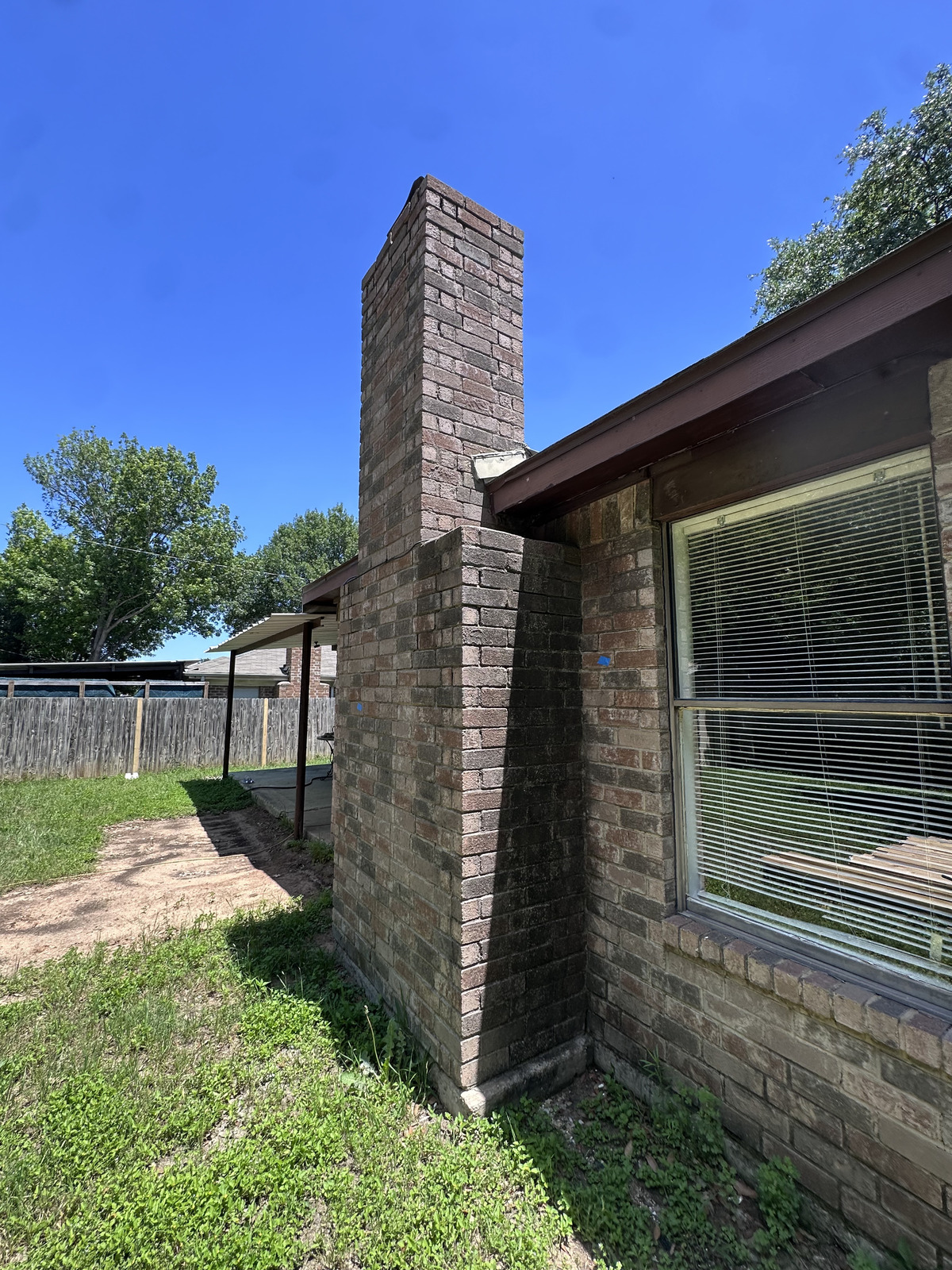
Chimney leaning or separating from the house — Foundation movement in Fort Worth's clay soil is displacing the chimney structure, and the gap at the roofline will worsen with each rain season
Water stains on ceiling or walls near the fireplace — Failed crown or deteriorated step flashing is allowing rainwater inside the chimney chase, causing hidden rot in surrounding framing
Brick spalling or flaking on the chimney exterior — Freeze-thaw moisture damage is destroying brick faces from the inside out; once the hard-fired surface is lost, deterioration accelerates rapidly
Damaged or missing chimney cap — Without a cap, rain falls directly into the flue, animals nest inside, and debris accumulates on the smoke shelf, creating blockage and fire risk
Visible mortar gaps between chimney bricks — Deteriorated joints allow wind-driven rain into the wall cavity, and each storm cycle widens the gaps further
Rusted firebox damper or throat — Persistent moisture inside the flue is corroding metal components, confirming water is entering from above through crown or cap failure
Foul odor from fireplace during humid weather — Moisture mixing with creosote deposits creates a strong smell that indicates water penetration and incomplete chimney function
Our Professional Chimney Repair Process Step-by-Step
Detailed Inspection with Camera Assessment
We examine the crown, cap, flashing, and exterior masonry visually, then run a high-resolution camera through the flue to inspect the liner, smoke shelf, and interior joints for hidden damage that cannot be seen from outside
Root Cause Diagnosis
Determine whether crown failure, flashing separation, mortar erosion, flue liner cracks, or foundation soil movement is the primary driver so repairs address the actual problem rather than just symptoms
Material Matching
Source replacement brick matched for color, size, and texture; custom-mix mortar to match existing composition and shade; select crown material and flashing metals compatible with your roof system
Safe, Precise Repair
Execute chimney crown repair, brick replacement, repointing, or flue liner installation using scaffolding and professional fall protection equipment at roof height
Sealing & Waterproofing
Apply breathable silane/siloxane sealers to the crown, repaired masonry, and chimney-to-roof flashing junction to prevent future water intrusion while allowing interior moisture to escape
Cleanup, Testing & Walkthrough
Remove all debris from roof and ground, perform a water test on repaired areas, and walk through all completed work with the homeowner to confirm satisfaction
Before & After: Real Fort Worth Chimney Projects
Cracked Crown Rebuild in Westover Hills
A chimney crown with multiple through-cracks was allowing water into the chase during every rain. We removed the failed crown, poured a new reinforced crown with proper overhang and drip edge, and sealed the entire chimney. The homeowner reported zero leaks through the following spring storm season.
Spalling Chimney Restoration near TCU
Severe brick spalling on a 1960s ranch home chimney had left the top eight courses crumbling. We replaced 40 damaged bricks with salvaged period-matched brick, repointed all joints with color-matched mortar, and installed a stainless steel cap. The chimney now blends seamlessly with the original construction.
Leaning Chimney Stabilization in Crowley
A chimney separating from the roofline due to clay soil settlement had opened a two-inch gap at the flashing. We installed helical anchors to stabilize the structure, rebuilt the connection to the roof deck, replaced all flashing, and sealed the crown to prevent recurrence.
Flue Liner Replacement in Arlington
Camera inspection revealed a cracked clay flue liner with gaps at multiple joints, creating a carbon monoxide risk. We installed a continuous stainless steel liner, rebuilt the deteriorated crown, and added a proper rain cap to protect the investment long-term.
Common Causes of Chimney Damage in Fort Worth & North Texas
Fort Worth sits on highly expansive clay soil that swells during heavy rain and contracts in drought. This seasonal cycle creates ground movement that shifts foundations and separates chimney structures from the main roofline. Over time, even small foundation movement opens gaps between the chimney and the house, allowing water to enter and accelerate deterioration.
North Texas freeze-thaw cycles are especially damaging to exposed chimneys. Water seeps into porous brick and mortar joints during fall and winter rains. When overnight temperatures drop below freezing, that trapped moisture expands by roughly nine percent, cracking mortar and causing brick spalling in Texas clay soil environments. Repeated cycles can destroy an unprotected chimney crown in just a few seasons.
High summer heat in Fort Worth regularly exceeds 100 degrees, and chimney flue temperatures can reach 1,000 degrees during use. This extreme thermal cycling causes expansion and contraction stress on bricks, mortar, and flue liners. Combined with North Texas humidity levels that often exceed 70 percent, the conditions create a perfect environment for efflorescence buildup and accelerated mortar erosion on chimney structures throughout Tarrant County.
Before & After Chimney Repair Examples
Our Fort Worth chimney repair portfolio demonstrates the range of projects we handle across Tarrant County. Here are representative examples of recent work:
Cracked Chimney Crown Rebuild in Westover Hills
A severely cracked concrete crown was allowing water to run down the flue and stain interior ceilings. We removed the failed crown, installed a new reinforced concrete crown with proper overhang and drip edge, and applied a waterproof membrane. The homeowner reported zero leaks through the following winter and spring rain season.
Full Chimney Rebuild Above Roofline in Arlington
Years of freeze-thaw damage had caused extensive brick spalling and mortar failure on a two-story chimney. We dismantled the chimney above the roofline, salvaged reusable bricks, sourced matching replacements, and rebuilt the structure with new flashing, a stainless steel cap, and a spark arrestor. The restored chimney matches the home's original 1985 brickwork seamlessly.
Efflorescence Removal and Repointing in Keller
Heavy white salt deposits covered a chimney that had been absorbing moisture through deteriorated mortar joints. We cleaned the efflorescence using appropriate masonry cleaners, repointed all failed joints with color-matched mortar, and applied a breathable penetrating sealer. The chimney surface now repels water while maintaining its natural brick appearance.
Why Choose Professional Chimney Repair Over DIY
Chimney repair ranks among the most hazardous home maintenance tasks. Working at roof height on a sloped surface carries real fall risk, and incorrect repairs can create carbon monoxide hazards or fire dangers inside your home. Here is how professional chimney repair compares to DIY attempts:
Professional Chimney Repair
- +Licensed and insured crews with fall protection equipment and rooftop safety training
- +Camera flue inspections to identify hidden liner cracks and blockages
- +Mortar matching by composition and color for seamless, code-compliant joints
- +Proper crown construction with reinforcement, overhang, and drip edge details
- +Workmanship warranty and documentation for insurance or home sale
DIY Chimney Repair Risks
- -Significant fall hazard working at roof height without professional equipment
- -Using wrong mortar type can damage historic bricks or void structural integrity
- -Improper crown or flashing repairs often fail within one season, costing more long-term
- -No ability to inspect flue liner condition, risking hidden carbon monoxide leaks
- -No warranty and potential code violations that complicate future home sales
For Fort Worth homeowners, chimney work requires understanding local building codes, matching mortar to the region's common brick types, and accounting for the soil movement patterns unique to North Texas. A professional masonry contractor brings the experience, equipment, and accountability that chimney repair demands.
Frequently Asked Questions About Chimney Repair in Fort Worth
How much does chimney repair cost in Fort Worth?
Crown repairs $800–$2,500; full rebuilds $5,000–$15,000. Free estimates.
How long does chimney repair take?
Most repairs 1–3 days; larger rebuilds 1–2 weeks.
Do you repair chimney leaks?
Yes—leaks are our most common call, fixed with crown repair and flashing.
Is chimney repair covered by insurance?
Often yes for storm or sudden damage. We provide documentation for claims.
Related Guides & Tips for Your Masonry Needs
Signs Your Chimney Needs Immediate Repair
Learn to identify warning signs like cracks, spalling, and water damage before they become expensive emergencies
Tuckpointing for Chimney Mortar Joints
Professional mortar joint restoration prevents water intrusion and extends chimney lifespan in Fort Worth's climate
Masonry Waterproofing Solutions in Fort Worth
Protect your chimney from North Texas rain and freeze-thaw damage with breathable waterproofing and sealing
Protecting Brick & Masonry in Winter
Essential winter maintenance tips for Fort Worth homeowners to prevent freeze-thaw damage to chimneys and brick
The Ultimate Tuckpointing Guide
Complete guide to mortar restoration techniques, costs, and when to repoint your chimney or masonry structures
Historic Masonry Restoration Services
Specialized restoration for historic chimneys and brick structures throughout Fort Worth and Tarrant County
Get Your Free Inspection Today
No obligation — we come to you, assess the damage, and give you an honest quote.
Need Chimney Repair in Fort Worth?
Protect your home from leaks and hazards — get your free estimate today.
Request Free Estimate