Cracks in brick walls are one of the most common reasons Fort Worth homeowners call a mason, and most of them are not an emergency. Some are cosmetic. Some are the first sign the house is moving. The crack itself usually tells you which one you are looking at, if you know what to check.
This guide walks through the four crack patterns we see on brick homes around Tarrant, Johnson and Parker County, why they show up here, and when to stop watching a crack and get it looked at.
Already know you want it fixed?
See our brick crack repair service →What a Crack in a Brick House Usually Means
Start with what you are looking at. Most brick on a Fort Worth house built in the last several decades is veneer: a single layer of brick tied to a wood frame, sitting on a ledge of the foundation. The frame carries the roof. The brick is the skin.
That matters because a brick wall crack on a veneer home is rarely a sign that the wall is about to fall down. It is a sign that something moved, and it is an opening for water. Older homes in places like Fairmount and Arlington Heights can be different, so an older structural brick wall deserves a closer look.
Stair-Step, Vertical, Horizontal and Hairline Cracks
The direction of a crack is the best clue you have. Here is what each pattern usually points to.
Stair-Step Cracks in a Brick House
These climb diagonally through the mortar joints like a staircase. They are the most common crack pattern we see in this area, and they usually mean one part of the house has moved more than the part next to it. You will often find them running up from a corner of the slab or out from the corner of a window.
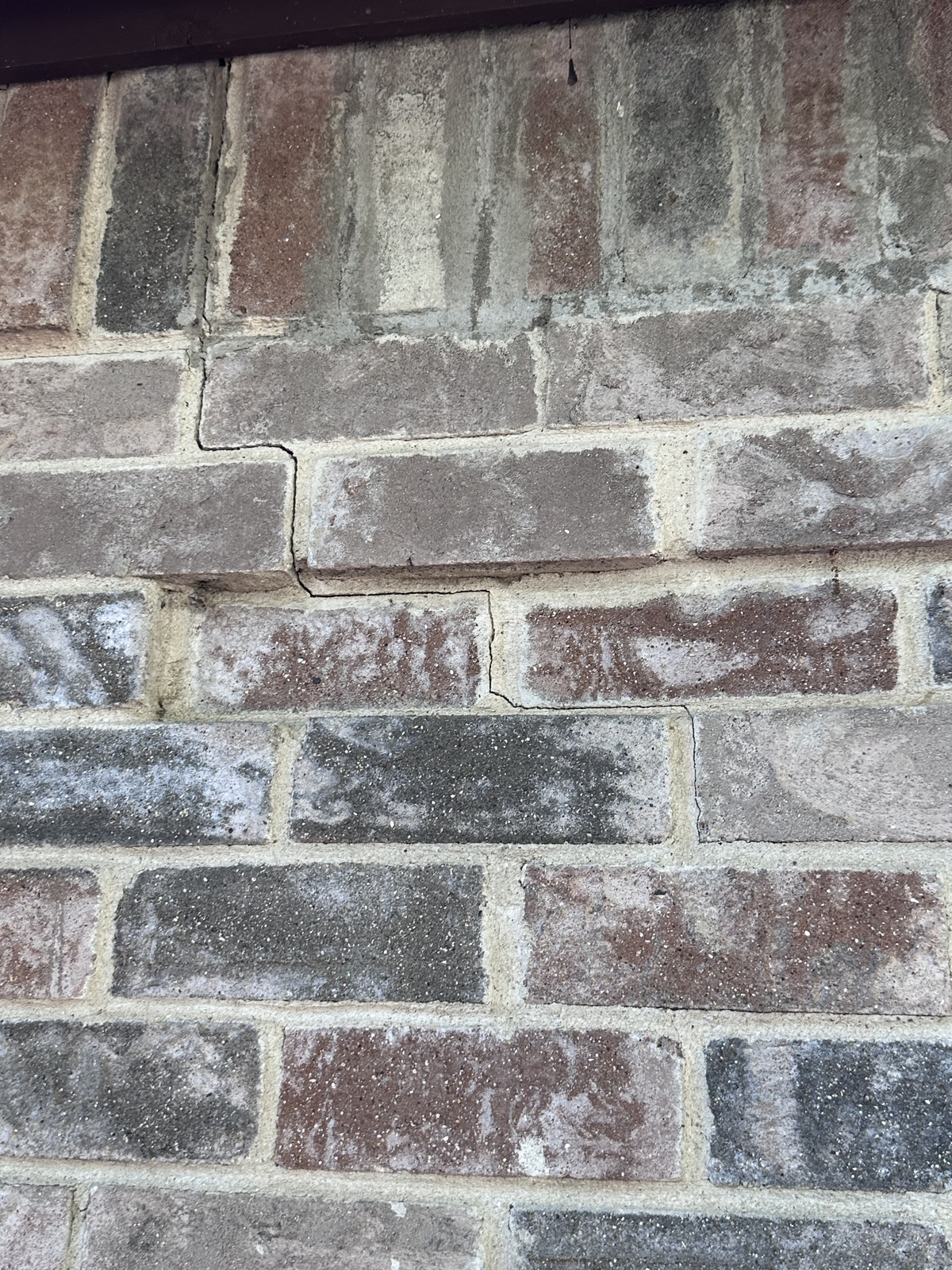
A hairline stair-step crack that has not changed in years is a different conversation from one that opened up after a dry summer. Width and change over time matter more than the pattern alone.
Vertical Crack in Brick
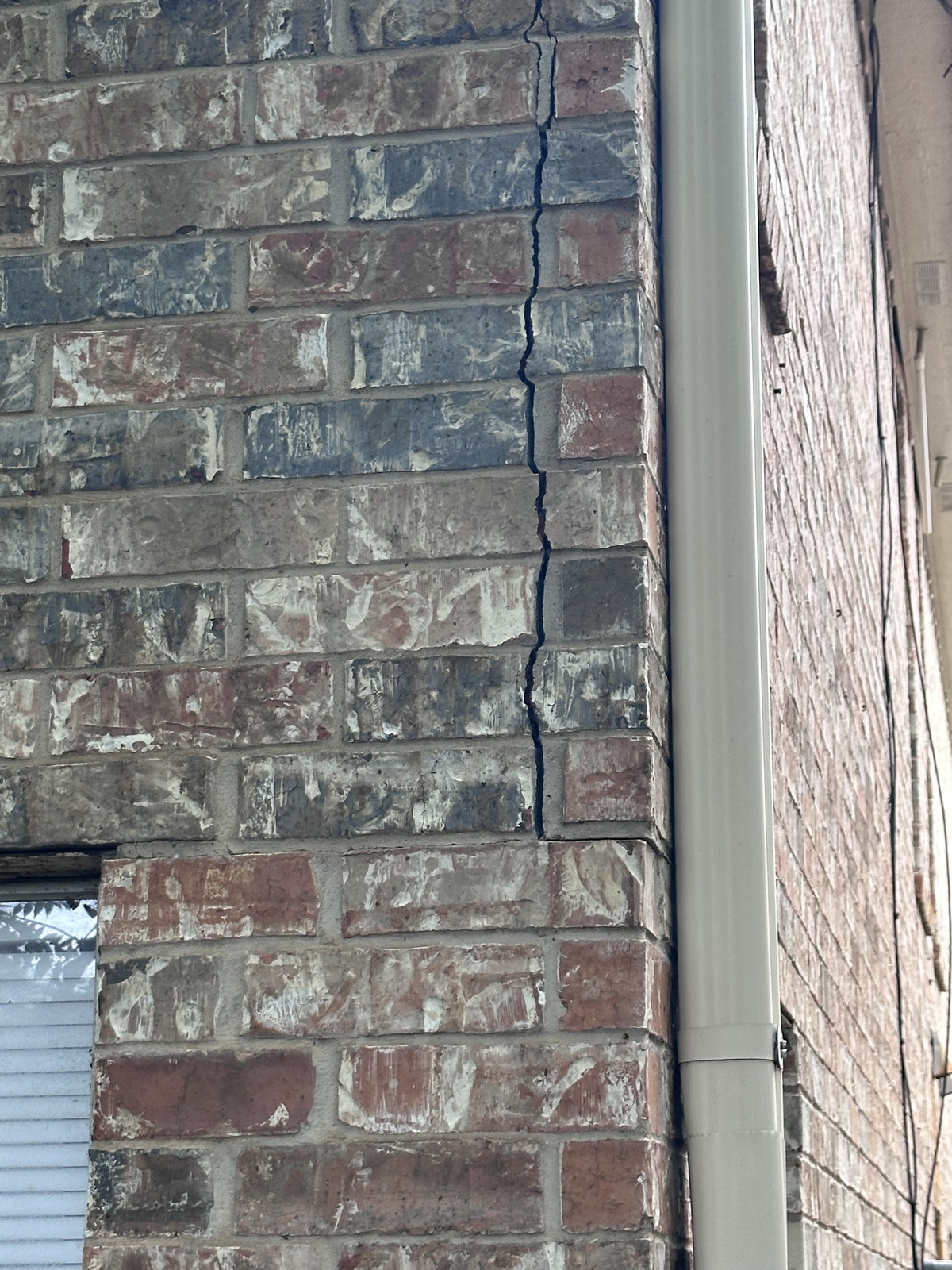
A vertical crack runs straight up and down, through the joints, the bricks, or both. There are two common causes, and they look a little different.
- Movement. The crack is wider at the top or the bottom because one side of the wall is rotating away from the other. You will often see this near a corner.
- Expansion. Brick grows and shrinks with heat and moisture. On a long wall with no control joint, it can relieve that stress by cracking. These cracks tend to be an even width from end to end.
Horizontal Crack in a Brick Wall
Horizontal cracks get our attention quickly, because brick does not usually crack this way from settling alone. Along a window or garage door, a horizontal crack often points to a rusting steel lintel pushing the brick up as it expands. Across the middle of a wall, it can mean the ties holding the veneer to the frame have failed. On a retaining wall, it usually means soil pressure.
Hairline Cracks in Bricks and Mortar Joints
Hairline cracks in brickwork are thin enough that you cannot fit a credit card in them. Many are mortar shrinkage cracking: mortar loses water as it cures and pulls back slightly from the brick. They are common, and on their own they are usually cosmetic. They still let in water over time, so they are worth repointing during regular maintenance.
Cracked Mortar vs. Cracked Brick
Look closely at where the crack runs. Cracked mortar joints are what you want to see. Mortar should be softer than the brick, so when a wall moves, the crack follows the joints and the mortar can be replaced.
When the bricks themselves are cracking, the stress had nowhere easier to go. That can happen when the mortar is too hard for the brick, which is common after an old repair with the wrong mix, or when the movement was sudden or large. Those bricks need to be replaced, not just repointed. If the mortar between your bricks is crumbling rather than cracking, that is a different problem, and our mortar repair guide covers it.
Why Bricks Crack on Fort Worth Houses
The biggest cause here is under the house. Much of the area sits on expansive clay that swells when it rains and shrinks in a hot, dry summer, and brick does not bend. We explain how that works in detail in why bricks crack in Texas clay soil. It is not the only cause, though:
- Drainage. A downspout dumping next to the slab keeps one corner wet while the rest of the house dries out.
- Trees. Large trees close to the house pull moisture from the soil on one side.
- Rusting lintels. Steel over windows and garage doors expands as it rusts and cracks the brick around it.
- Heat and expansion. Long, sun-facing walls with no control joint can crack on their own.
- Old repairs. Mortar that is too hard, or a patch that trapped water, can cause the next crack.
When to Worry About Cracks in Brick Mortar
A crack by itself is not the emergency. These are the signs that turn it into something to act on:
- The crack is getting wider or longer.
- One side of the crack sits higher or farther out than the other.
- Bricks are loose, or you can rock one by hand.
- The wall looks like it is leaning, bowing or bulging.
- Doors and windows inside started sticking at the same time.
- You see matching cracks on the interior walls, or water getting in.
Our rule of thumb: "If you can slide a credit card into the crack, water can get in — that's when it needs attention."
Brick Wall Leaning or Bowing: When to Call an Engineer
A leaning or bowing brick wall is not a wait-and-see problem. On veneer, it can mean the ties to the frame have failed and the brick is standing on its own. Stay clear of it and keep kids away from that side of the house until someone has looked at it.
A mason can tell you what is wrong with the brick. A structural engineer can tell you what is wrong with the structure, and gives you an independent report that is not tied to anyone selling you a repair. We'll recommend an engineer evaluation when movement looks structural, such as bowing, leaning, or cracks that keep growing. We don't refer a specific engineer. The homeowner chooses their own.
How to Track a Crack Yourself
If a crack is small and you are not sure about it, give it a few months. Because clay moves with the seasons, watching through one wet stretch and one dry stretch tells you far more than a single look.
- Mark each end of the crack with a pencil line and the date.
- Take a close-up photo with a ruler in the frame, from the same spot each time.
- Repeat once a month, and after any big storm or long dry spell.
- If it passes your marks or gets wider, have it looked at.
Those photos are also useful to whoever inspects it, because they show whether the movement is active. Our 10 warning signs of brick damage covers what else to look for while you are out there.
DIY or Hire a Mason?
A short, stable hairline crack at ground level is a fair DIY job. Rake out the old mortar, match the mix and color as closely as you can, and pack it in properly. What does not work is caulk or a thin smear of mortar over the top. It usually pops out within a season or two, and it makes the proper repair harder.
Leave it to a mason if the crack is wide, growing, more than a ladder step off the ground, running through the bricks, or near a window or garage door. A patch over active movement will just crack again.
How We Repair Cracks in Brick Walls
Mortar cracks are usually caused by settlement. We cut out the cracked mortar and repoint with new mortar of like kind, matched to the existing. What else the wall needs depends on the cause, which is why the repair comes after the diagnosis:
- Repointing. Grinding out the cracked joints and packing in new mortar matched to the old. See our tuckpointing service.
- Replacing cracked bricks. Cutting out broken units and setting matching brick in their place.
- Rebuilding a section. Taking down and relaying brick that has shifted out of line.
- Crack injection. We also offer flexible sealant crack injection, followed by repointing, for structural crack locations.
- Cleanup and sealing. We use Prosoco Vana Trol for cleanup and Prosoco Siloxane PD as a sealer.
We repair brick and mortar. We do not do foundation repair. If the crack is coming from active foundation movement, we will tell you, and we refer that work to a foundation repair specialist. It is worth getting that sorted first, because a brick repair done over a moving foundation will not last. Full details are on our brick crack repair page.
What Does It Cost to Fix Cracks in Brick?
Every crack is different — call (817) 440-3050 for a free estimate. These are the things that affect the cost:
- Crack length and depth
- Number of bricks to replace
- Access and height
- Mortar matching
- Whether settlement is still active
Our brick repair cost guide explains more about what moves the price, and a free on-site estimate is the only way to get a real number for your wall.
Frequently Asked Questions About Brick Wall Cracks
Are hairline cracks in brick normal?
Often, yes. Hairline cracks in mortar joints are common on Fort Worth homes and many come from mortar shrinkage or normal seasonal movement. A hairline crack that stays the same size is usually a maintenance item. One that widens, lengthens, or reopens after repair is telling you the wall is still moving.
What do stair-step cracks in a brick house mean?
Stair-step cracks follow the mortar joints diagonally, and they usually mean one part of the house has moved more than another. On North Texas clay that is often seasonal soil movement under the slab. A stable hairline stair-step crack may only need repointing. A wide or growing one should be inspected before anyone patches it.
Is a vertical crack in brick a foundation problem?
Not always. Vertical cracks can come from foundation movement, but they can also come from the brick itself expanding and contracting on a long wall with no control joint. A crack that is wider at the top or bottom points more toward movement. A crack with an even width from end to end points more toward expansion.
When should I worry about cracks in brick mortar?
Our rule of thumb: if you can slide a credit card into the crack, water can get in, and that is when it needs attention. Also worry when a crack is growing, when one side sits higher or farther out than the other, when bricks are loose, when the wall is leaning or bowing, or when doors and windows inside start sticking at the same time. Those signs point to active movement, not just aging mortar.
Can I repair cracked mortar myself?
A short, stable hairline crack at ground level is a reasonable DIY job if you remove the old mortar and use a mortar that matches in strength and color. Caulk or a surface smear usually fails within a season or two. Leave anything wide, growing, high on the wall, or near a window lintel to a mason.
Do you repair foundations?
No. Fort Worth Brick Repair does not do foundation repair. We repair the brick and mortar. If an inspection points to active foundation movement, we will tell you and refer you to a foundation repair specialist, so the masonry repair is not done before the movement is dealt with.
Not sure what your crack means? Call (817) 440-3050 or
Get a free brick crack repair estimate →