Concrete Repair in Fort Worth, Texas
Professional repair of driveways, sidewalks, patios, and foundation corner pops in Fort Worth and Tarrant County
At Fort Worth Brick Repair LLC, we offer expert concrete repair services throughout Fort Worth, TX, and the surrounding DFW area. Texas' expansive clay soil, extreme temperature swings, and heavy rains cause common concrete problems like cracking, spalling, and settlement in driveways, sidewalks, patios, and foundation edges.
Our experienced team repairs stress cracks, corner pops on footings, and damaged surfaces using proven methods and high-quality materials. Proper concrete repair prevents trip hazards, water intrusion, and further structural damage while restoring safety and appearance.
Common Concrete Issues in Fort Worth Properties
Local soil and weather create frequent problems:
- Stress cracks in driveways from soil movement
- Corner pops and spalling on foundation edges
- Uneven or sunken sidewalk slabs (trip hazards)
- Cracking and pitting in patios and walkways
- Control joint failure allowing water entry
- Surface scaling from freeze-thaw or poor finishing
We fix these issues efficiently, helping homeowners and property managers avoid costly full replacements.
Our Concrete Repair Process
- Inspection & Diagnosis: Identify causes (soil, drainage, poor mix, etc.).
- Surface Preparation: Clean, remove loose material, and undercut edges.
- Structural Fixes: Replace badly settled sections; install rebar pins for corner pops.
- Patching & Resurfacing: Use polymer-modified concrete for strong bonding.
- Joint Sealing: Apply flexible sealants to control joints.
- Final Protection: Optional sealing for stain and weather resistance.
Searching for "concrete repair near me Fort Worth"? Our team delivers durable repairs that meet local codes and extend concrete life.
Stop concrete damage from worsening — contact us for professional repair today.
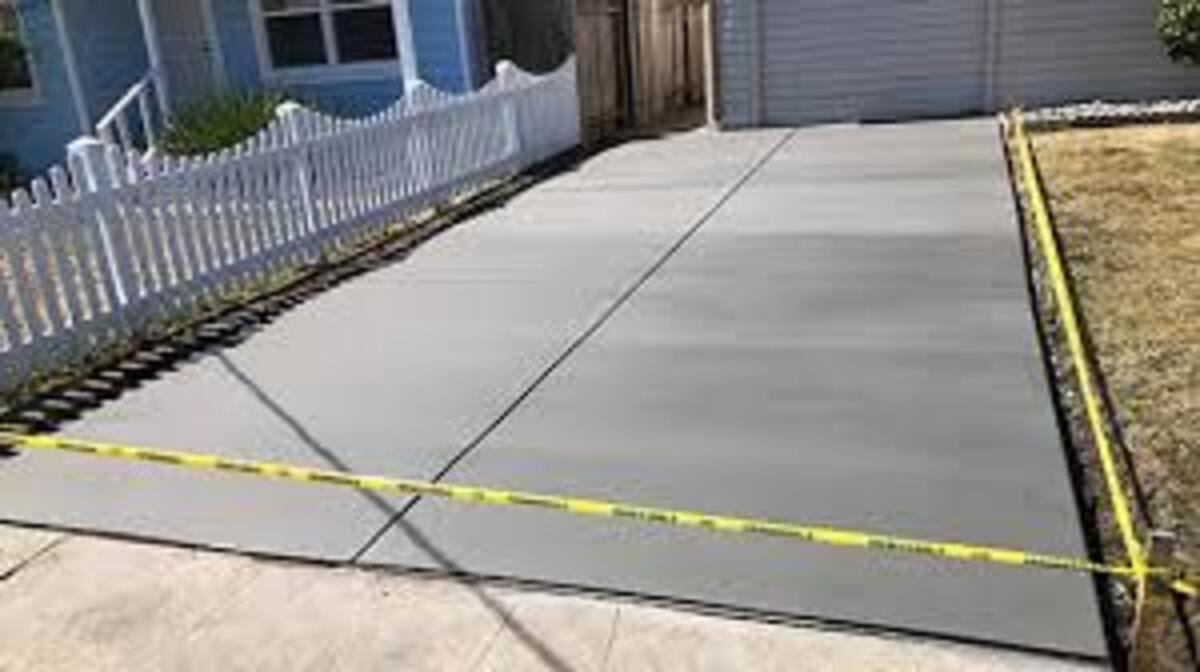
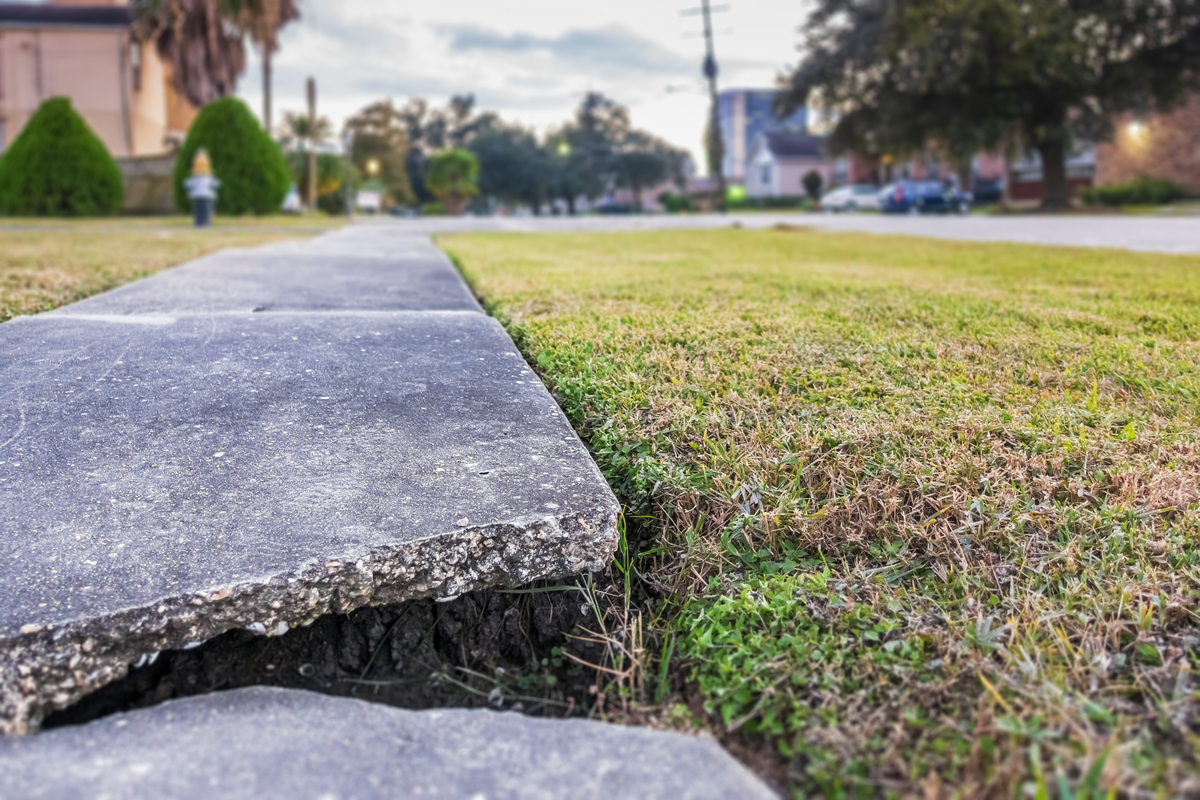
Common Causes of Concrete Damage in Fort Worth & North Texas Climate
Fort Worth's expansive clay soil is the leading force behind concrete damage throughout Tarrant County. This soil heaves upward when saturated by rain and settles when it dries, creating voids beneath slabs that cause stress cracks, sunken sections, and uneven joints across driveways, sidewalks, and patios. The cycle repeats with every weather change, and each round of movement compounds the damage from the last.
Large oak, pecan, and elm roots common to North Texas landscaping grow under concrete slabs with enough force to lift and crack four-inch-thick concrete. Freeze-thaw cycling causes surface scaling as water pooled in low spots or control joints expands during winter cold snaps. Fort Worth's rapid overnight temperature swings of 30 to 40 degrees prevent concrete from expanding and contracting gradually, creating thermal shock that compounds soil-related movement damage and shortens the useful life of untreated slabs.
Key Warning Signs You Shouldn't Ignore
Cracks wider than a quarter inch across driveway or patio — Active soil movement beneath the slab is generating ongoing structural stress; wide cracks will only grow larger without addressing the underlying cause
Uneven or sunken sidewalk sections — Void formation under the slab from soil settlement or underground water erosion has removed support, and the slab will continue sinking
Corner pops or spalls on foundation edges — Rebar too close to the surface is corroding and expanding, breaking off concrete cover in cone-shaped pieces at slab edges
Surface scaling, flaking, or pitting — Freeze-thaw damage, improper original finishing, or deicing salt exposure is destroying the top layer of the slab
Trip hazards where adjacent slabs have shifted — Soil heave or tree root intrusion has lifted one section relative to its neighbor, creating a step that is both a liability and a code violation
Standing water pooling on formerly level surfaces — Slab settlement has created low spots that collect rainwater, accelerating surface damage and creating slip hazards
Cracks radiating from corners of slabs — Stress concentration at corners from soil movement, heavy point loads, or insufficient thickness is splitting the slab at its weakest geometry
Garage floor or patio separating from house foundation — Differential settlement between independently poured structures is pulling them apart, creating gaps that allow water and insects into the home
Tree roots visibly lifting concrete sections — Root growth under the slab is actively displacing concrete and will continue until the root path is addressed or the slab is lifted clear
Our Professional Concrete Repair Process Step-by-Step
Detailed On-Site Inspection
Assess all concrete surfaces for cracks, settlement, scaling, and heave; probe for voids beneath slabs; evaluate tree root proximity, drainage patterns, and soil conditions around the perimeter
Root Cause Diagnosis
Determine whether clay soil movement, tree roots, drainage failure, material defects, or a combination of factors caused the damage so the repair addresses the actual problem, not just symptoms
Material & Method Selection
Choose the right approach for each area: polymer-modified compounds for structural patching, flexible sealants for control joints, or full section replacement where damage is beyond repair
Safe, Precise Repair
Patch structural cracks with bonded compounds, replace destroyed sections with properly reinforced new concrete, and address tree roots with barriers where needed
Joint Sealing & Surface Protection
Install flexible backer rod and sealant in all control joints to accommodate future soil movement, and apply optional surface sealer for stain resistance and weather protection
Cleanup, Drainage Check & Walkthrough
Clean all surfaces, verify positive drainage away from the home foundation, and review all repaired areas with the homeowner
Common Concrete Projects We Handle
Illustrative examples of typical Fort Worth-area projects. Every property is different, so your scope and price will depend on an on-site inspection.
Sidewalk Trip Hazard Repair in Haltom City
Tree roots had lifted three sidewalk sections up to an inch and a half above their neighbors, creating trip hazards that the city had flagged for repair. We cut the roots, installed root barriers, replaced the displaced slabs, and sealed all joints to prevent future root intrusion.
Patio Crack Repair and Sealing in Arlington
A large backyard patio had developed wide cracks from soil settlement that allowed weeds to grow through and water to pool underneath. We filled all structural cracks with flexible polymer compound, sealed every control joint, and applied a penetrating sealer to the entire surface.
Garage Floor Separation Fix in Crowley
The garage slab had pulled away from the house foundation by over an inch, allowing water and insects inside. We filled the gap with flexible backer rod and sealant, and sealed the entire garage floor to prevent future moisture intrusion.
Why Choose Professional Concrete Repair Over DIY
Concrete repair requires understanding why the damage occurred before choosing a repair method. Patching a crack without addressing the soil, drainage, or structural cause behind it guarantees the crack returns, often worse than before.
Professional Concrete Repair
- +Root cause diagnosis to determine if soil, drainage, tree roots, or structural issues are driving the damage
- +Polymer-modified repair materials that bond permanently to existing concrete and flex with movement
- +Proper joint sealing with flexible materials designed for the expansion and contraction of Fort Worth's climate
- +Code-compliant work that meets trip hazard standards and satisfies property inspection requirements
DIY Concrete Repair Risks
- -Retail crack filler products are rigid and pop out during the next soil movement cycle
- -Surface patching compounds do not bond well to existing concrete and delaminate within months
- -Improper corner pop repair leaves rebar exposed to continued corrosion and expansion
- -Visible patch lines and color mismatches make DIY repairs obvious and reduce curb appeal
The key advantage of professional concrete repair is access to materials and methods that homeowners simply cannot purchase at retail. Polymer-modified bonding compounds and flexible joint sealants designed for Texas soil conditions outperform consumer products by a wide margin. A professional also brings the diagnostic ability to identify why the damage occurred, ensuring the repair addresses the cause and not just the symptom.
Frequently Asked Questions About Concrete Repair in Fort Worth
How much does concrete repair cost in Fort Worth?
Small patches $300–$800; driveway resurfacing $3–$8 per sq ft. Free estimates.
How long does concrete repair last?
Proper repairs last 10–20 years with good drainage and sealing.
Can you fix sunken sidewalks?
We don't do slab leveling or mudjacking, but we can repair and seal cracks, patch damaged concrete, or replace a badly settled section. If leveling is the better fix, we'll tell you.
Do you repair driveway cracks?
Yes—from hairline stress cracks to wide gaps, we fill and seal for durability.
Related Guides & Tips for Your Masonry Needs
Complete Concrete Repair Guide
Expert tips for repairing driveways, sidewalks, and concrete structures in Fort Worth's climate
Retaining Wall Repair Services
Concrete and masonry retaining wall repair throughout Fort Worth and Tarrant County
Signs Your Retaining Wall Needs Repair
Identify concrete damage and failure in retaining walls before they collapse
Brick Mailbox Foundation Repair
Fix tilting and settling mailbox foundations caused by Fort Worth's expansive clay soil
Protecting Concrete in Winter
Prevent freeze-thaw damage to concrete driveways, sidewalks, and patios in North Texas
Brick & Masonry Repair
Complete masonry services including brick, stone, and concrete repair in Fort Worth
Get Your Free Inspection Today
No obligation — we come to you, assess the damage, and give you an honest quote.
Need Concrete Repair in Fort Worth?
Fix cracks and settlement before they worsen — get your free estimate today.
Request Free Estimate